
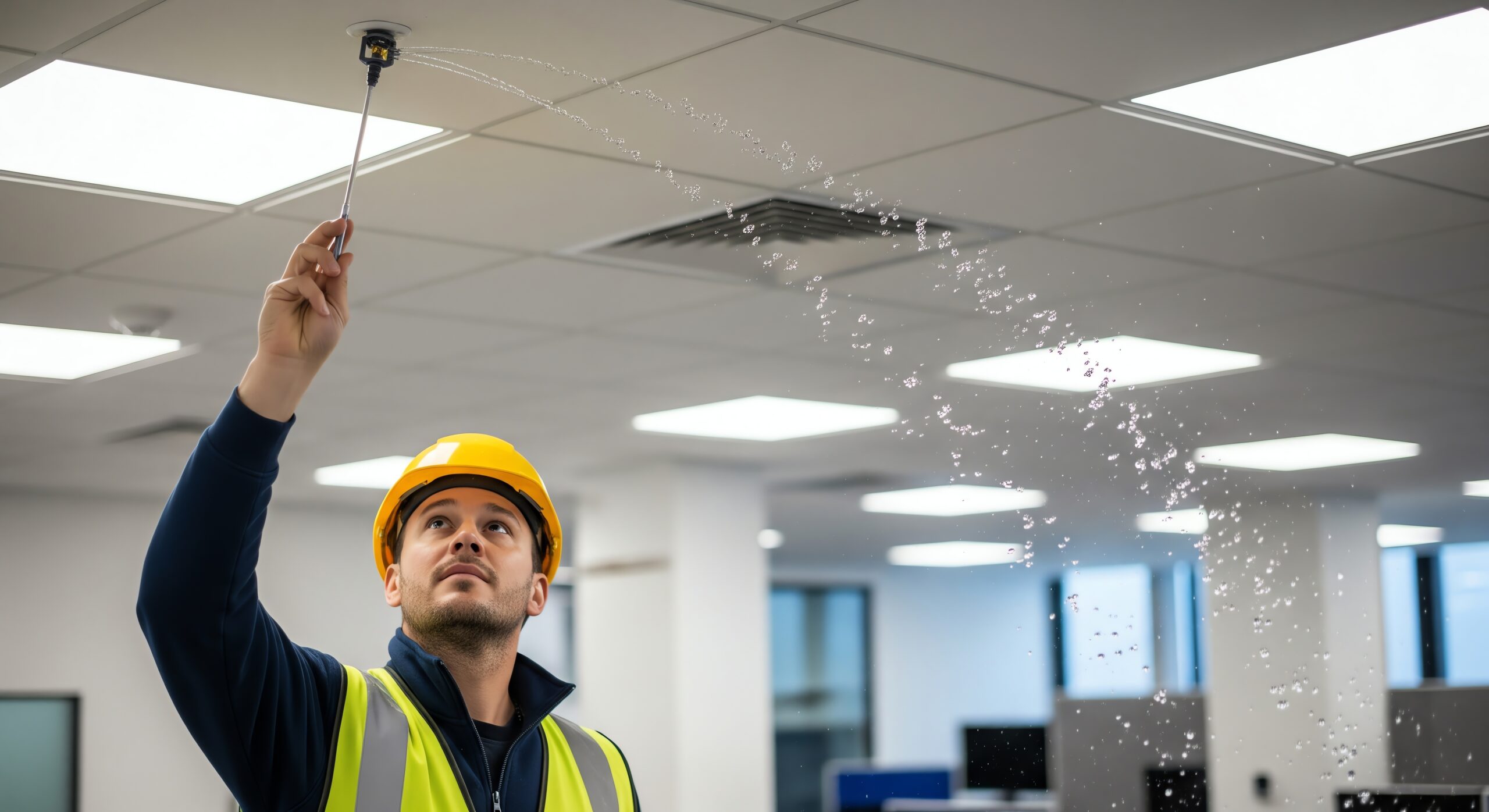
Fire sprinkler inspection requirements in New York are governed by NFPA 25, as adopted through the Fire Code of New York State and enforced by local Authorities Having Jurisdiction. For commercial property owners and facility managers in Rochester and throughout Upstate New York, staying on schedule helps prevent violations, failed inspections, and system-performance risks during a real fire.
Key Takeaways
- NFPA 25 establishes weekly, monthly, quarterly, annual, and five-year inspection and testing intervals for commercial sprinkler systems.
- Local Authorities Having Jurisdiction in New York may impose requirements that exceed NFPA 25 minimum standards.
- The five-year internal pipe inspection is frequently missed and directly affects system reliability and insurance standing.
- Impairment procedures are mandatory and require formal documentation, notification, and compensatory measures.
- Multi-site operators benefit from a centralized ITM calendar and coordinated documentation tracking.
Key Inspection and Testing Rules for New York Commercial Systems
Understanding inspection tiers is the foundation of compliance. Each level targets specific system components and carries defined documentation requirements. These inspection standards are built on NFPA 25, which outlines the nationally recognized framework for inspection, testing, and maintenance of water-based fire-protection systems.
NFPA 25 and AHJ Authority
NFPA 25 sets the baseline inspection, testing, and maintenance requirements for water-based fire-protection systems in New York State. However, the local Authority Having Jurisdiction has final enforcement authority and may require stricter timelines or additional reporting.
A commercial facility in Monroe County may face different procedural expectations than a comparable property in Albany County. Written AHJ confirmation should be secured before finalizing any ITM schedule.
In facilities where sprinkler systems integrate with fire alarm systems and remote signal transmission, coordination with fire alarm monitoring providers is critical. Proper integration ensures alarm verification aligns with inspection and testing.
For properties operating in Western New York and Central New York, enforcement practices in cities such as Buffalo and Syracuse may influence inspection coordination.
Weekly and Monthly Visual Inspections
Weekly and monthly inspections focus on visible conditions, but they are not optional.
Control valves that are not locked or electronically supervised must be visually checked each week. Gauges on wet-pipe systems require monthly review to confirm normal operating pressure. These inspections must be recorded in a documented log.
Undocumented checks are treated as missed inspections during an AHJ review.
In properties with dedicated riser rooms or combined domestic and fire-service lines, coordination with certified backflow prevention device inspections helps maintain overall water-supply integrity.
Annual and Five-Year Inspection Milestones
The annual inspection is the primary compliance benchmark for most commercial properties in Rochester and across Upstate New York. It includes sprinkler-head condition, main-drain testing, waterflow alarm verification, tamper-switch testing, and evaluation of hangers, bracing, and obstructions.
These procedures align with expectations adopted under the New York State Fire Code. Separate from the annual review, the five-year internal pipe inspection requires opening the system to check for corrosion, scale, debris, or biological buildup.
These conditions can restrict water delivery during a fire event. Buildings that experience pipe failure or accidental damage may require immediate broken fire sprinkler emergency service to restore protection before the next inspection cycle.
Compliance Planning for Multi-Site Facilities
Inspection compliance becomes more complex when managing multiple buildings across different jurisdictions. A structured, documented program prevents gaps, missed milestones, and inconsistent reporting.
This is especially true for portfolios that include wet, dry-pipe, or preaction fire sprinkler systems. Organizations operating in multiple cities may also coordinate regional alarm infrastructure, including Buffalo and Syracuse.
Inspection scheduling and AHJ communication can vary by jurisdiction.
Centralized ITM Scheduling
Each sprinkler system operates on its own inspection clock. Multi-site commercial operators across Western New York and the Capital Region should maintain a master ITM calendar. This calendar should track quarterly, annual, and five-year inspection intervals for every property.
A centralized schedule strengthens compliance oversight and supports defensible documentation during audits.
Documentation and Deficiency Tracking
NFPA 25 requires inspection, testing, and maintenance records to be retained and made available to the AHJ upon request. Each site must maintain detailed reports that include technician credentials, test results, gauge readings, and clearly identified deficiencies.
Single-page sign-off sheets are not sufficient documentation for most New York State commercial occupancies. Organized recordkeeping also supports insurance reviews and internal risk-management programs.
Impairment Management Protocols
When a sprinkler system is taken out of service, NFPA 25 Chapter 15 requires activation of a formal impairment procedure. This process includes designating an impairment coordinator and notifying the AHJ and insurance carrier.
Impairment tags must be posted at affected control valves. Compensatory measures, such as a fire watch, may be required until restoration is complete.
In New York State, these steps apply to both planned maintenance and emergency failures. Facilities that maintain compliant components through a verified supplier are often better positioned to reduce restoration delays.
Keep Your Sprinkler Systems Compliant Year-Round
Fire sprinkler compliance is not a once-per-year task. It is a continuous program of documented inspection, testing, maintenance, and corrective action. A structured ITM program protects occupants, supports code compliance, and reduces liability exposure.
Empire Fire Protection Services works with commercial property owners throughout Rochester and Upstate New York to coordinate inspection, testing, and repair under a single point of contact.
To review your compliance schedule or documentation program, contact us.
Frequently Asked Questions
How often are sprinklers inspected?
Commercial sprinkler systems follow weekly, monthly, quarterly, annual, and five-year inspection intervals under NFPA 25. Specific components are reviewed at different frequencies. Local AHJs may impose additional requirements beyond the national standard.
What is the five-year inspection?
The five-year inspection requires an internal examination of sprinkler piping to identify corrosion, scale, debris, or obstruction. It applies to wet-pipe, dry-pipe, preaction, and deluge systems. This inspection is separate from the required annual inspection.
What happens during an annual inspection?
An annual inspection includes main-drain testing, waterflow alarm verification, sprinkler-head evaluation, gauge checks, supervisory-device testing, and review of hangers and bracing. Results must be documented in a detailed report retained for AHJ review.
What is a sprinkler system impairment?
An impairment occurs when part of a sprinkler system is out of service. NFPA 25 requires AHJ and insurer notification, tagging of affected valves, and compensatory measures such as a fire watch until the system is restored.