
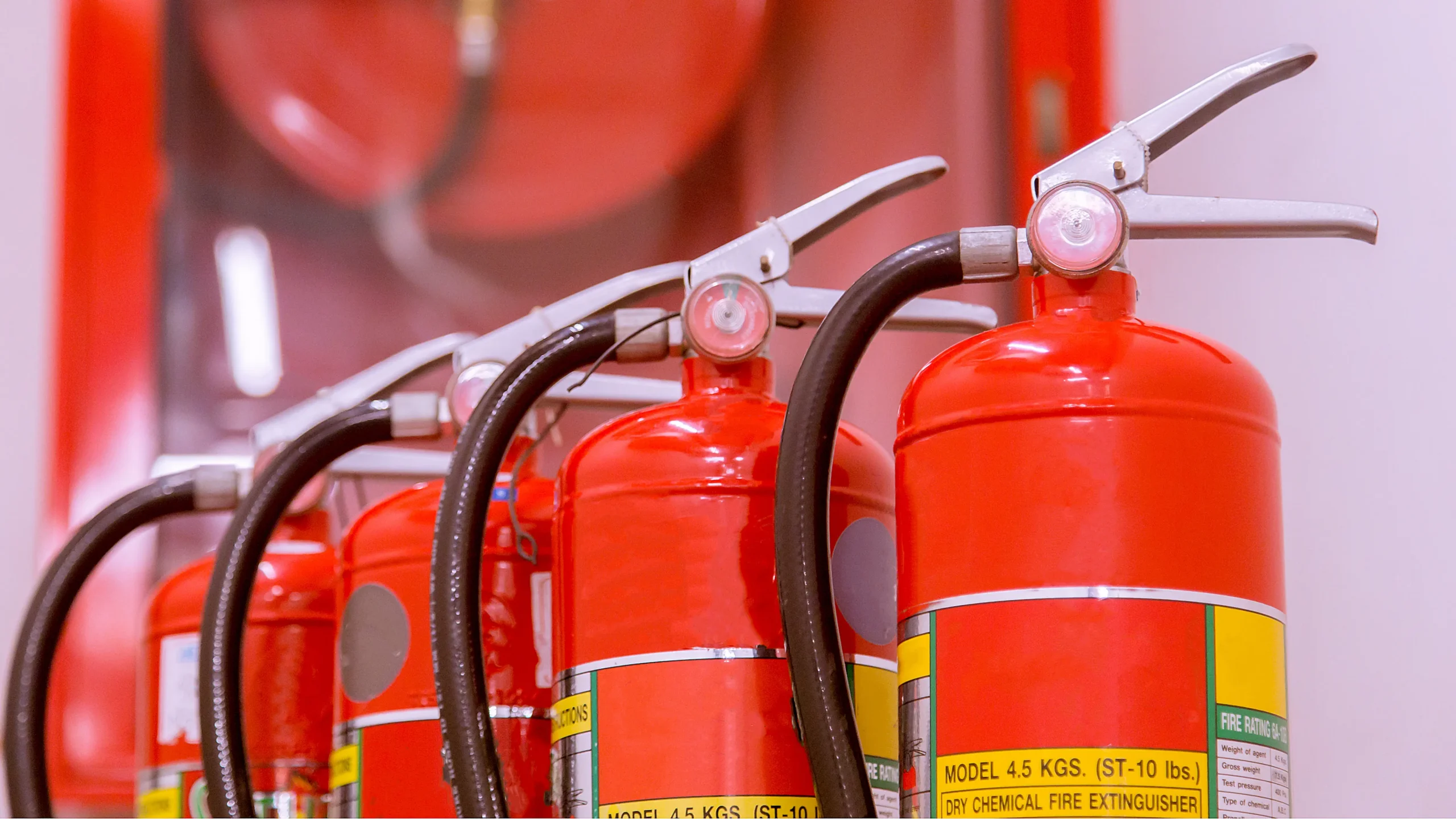
At Empire Fire Protection Services, we help facility managers and building owners across Upstate New York and Pennsylvania. Our team helps determine when a fire extinguisher needs service or replacement. Regular attention to equipment condition and maintenance records helps keep extinguishers ready for emergencies. It also supports ongoing fire-protection compliance.
Key Takeaways
- Fire extinguishers should receive routine visual checks and scheduled professional inspection and maintenance.
- Pressure problems, cylinder damage, and evidence of discharge are common signs a fire extinguisher needs service.
- An extinguisher that has been used should be evaluated and, when appropriate, recharged before returning to service.
- Service tags and maintenance records help facility teams identify extinguishers requiring inspection, testing, or additional attention.
- Replacement may be necessary when an extinguisher is damaged, fails required testing, or cannot safely return to service.
Signs an Extinguisher Needs Service, Recharge, or Replacement
Physical condition and operating indicators can reveal problems before an extinguisher is needed during an emergency. Routine checks help facility teams identify signs a fire extinguisher needs service. They also help teams avoid waiting until the next scheduled service visit.
OSHA requires workplace portable extinguishers to receive monthly visual inspections and annual maintenance checks.
These requirements make routine observation an important part of commercial fire extinguisher maintenance. Facility managers needing professional fire extinguisher and emergency light services can address identified equipment concerns during scheduled service visits.
A Pressure Gauge Reading Outside the Green Zone
A fire extinguisher pressure gauge outside the recommended operating range can signal a potential problem. NFPA 10 inspection procedures include checking whether the pressure gauge or indicator remains within its operable range. Facility teams throughout Upstate New York and Pennsylvania should flag abnormal readings during routine visual checks.
Employees should not attempt to diagnose or adjust questionable equipment without appropriate training. A qualified fire-protection professional can evaluate the extinguisher and determine the appropriate action. Depending on the unit, that action could involve maintenance, recharge, testing, or another service procedure.
This step is especially important in commercial facilities with extinguishers spread across several areas. Kitchens, mechanical rooms, warehouses, production areas, and offices can present different fire hazards and equipment needs.
Visible Corrosion or Damage to the Cylinder
Dents, cracks, significant corrosion, and other cylinder damage should not be dismissed as cosmetic. OSHA identifies conditions that may require attention before scheduled hydrostatic testing, including damaged cylinder threads and corrosion that causes pitting.
Questionable equipment should be professionally evaluated to determine whether maintenance, testing, or replacement is appropriate. Facilities may also coordinate extinguisher service with fire alarm systems in Buffalo, NY during broader fire-protection planning.
Any Discharge, Even Partial
An extinguisher that has been discharged should not simply return to its bracket. This applies even when the fire extinguisher pressure gauge still appears acceptable. OSHA requires workplace extinguishers to remain fully charged, operable, and in their designated locations except during use.
After any discharge, the extinguisher should receive professional evaluation and any required service before returning to service. Rechargeable extinguishers may be recharged when their condition and applicable requirements allow it.
The correct action depends on the extinguisher type, condition, and service requirements. Facility managers should also ensure that serviced or replacement equipment returns to the correct location. Consistent placement helps keep fire-protection equipment organized and readily identifiable throughout a commercial property.
Next Steps for New York and Pennsylvania Fire Extinguisher Compliance
Knowing that an extinguisher needs attention is only the first step. Commercial facilities also need a consistent process for reviewing service information and tracking multiple units. That process should help determine when to recharge a fire extinguisher and when replacement is appropriate.
OSHA places responsibility for workplace extinguisher inspection, maintenance, and testing on employers. Clear records can therefore support an organized fire extinguisher annual inspection and maintenance program.
Reading the Service Tag Correctly
Service tags provide maintenance information that facility managers can use when reviewing commercial fire extinguisher maintenance. A tag alone, however, should not be treated as proof that no further attention is required. Facility teams should review the available service dates, markings, and records.
OSHA requires applicable employers to record the annual maintenance date. The record must be retained for one year after the last entry or the life of the shell, whichever is less. Reviewing these records alongside the extinguisher’s physical condition provides a clearer maintenance picture.
When a service marking or maintenance interval is unclear, a fire-protection technician can review the unit. The technician can also evaluate available service history before determining the appropriate next step.
Tracking Multiple Extinguishers Across a Property
Restaurants, warehouses, schools, healthcare properties, industrial facilities, and other commercial buildings may contain numerous extinguishers. Those units can be spread across several floors, rooms, buildings, or operational areas. An organized inventory makes commercial fire extinguisher maintenance easier to manage.
Facility teams can track each extinguisher’s location, type, identifying number, inspection activity, and completed professional service. Consistent records make it easier to identify overdue attention or damaged equipment.
They can also help teams locate units requiring additional maintenance. This approach is especially useful for organizations responsible for several buildings or sites. Businesses coordinating broader protection needs can also review fire alarm systems in Syracuse, NY while planning fire-protection work in that market.
Understanding Recharge Versus Replacement Costs
The decision between recharge and replacement depends on the extinguisher’s type, condition, service history, and testing requirements. A serviceable rechargeable unit may be recharged, while damaged or unsuitable equipment may require replacement.
OSHA requires certain stored-pressure dry-chemical extinguishers with a 12-year hydrostatic-test interval to receive maintenance every six years. Non-refillable disposable dry-chemical containers are exempt from this requirement.
A professional evaluation can determine whether recharge or replacement is appropriate for the specific extinguisher.
Schedule a Fire Extinguisher Compliance Review
Fire extinguisher maintenance is easier to manage when service records, equipment condition, and upcoming requirements are reviewed together. Empire Fire Protection Services provides extinguisher inspection and service for commercial properties across Upstate New York and Pennsylvania.
Empire Fire Protection Services helps facility managers identify extinguishers that require professional attention and address service needs before equipment is relied on during an emergency.
Contact us to request a fire extinguisher compliance review.
Frequently Asked Questions
Do fire extinguishers need to be replaced or serviced?
Yes. Fire extinguishers require routine checks and professional service throughout their usable life. Replacement may become necessary when a unit is damaged, fails required testing, reaches an applicable service limit, or cannot safely return to service.
Is a 10-year-old fire extinguisher still good?
Age alone does not determine whether a rechargeable extinguisher needs replacement. Its type, physical condition, maintenance history, and testing requirements matter. A qualified technician can determine whether continued service, additional testing, or replacement is appropriate.
Is it cheaper to recharge a fire extinguisher or buy a new one?
The more economical option depends on the extinguisher’s type, size, condition, and required service. A serviceable rechargeable unit may justify recharging. Significant damage, failed testing, or other deficiencies can make replacement the appropriate option.
How do I know if my fire extinguisher needs to be replaced?
Visible cylinder damage, significant corrosion, failed testing, or conditions preventing safe service can indicate replacement is necessary. If an extinguisher has damage or an abnormal pressure reading, have a qualified technician evaluate it before continued use.