
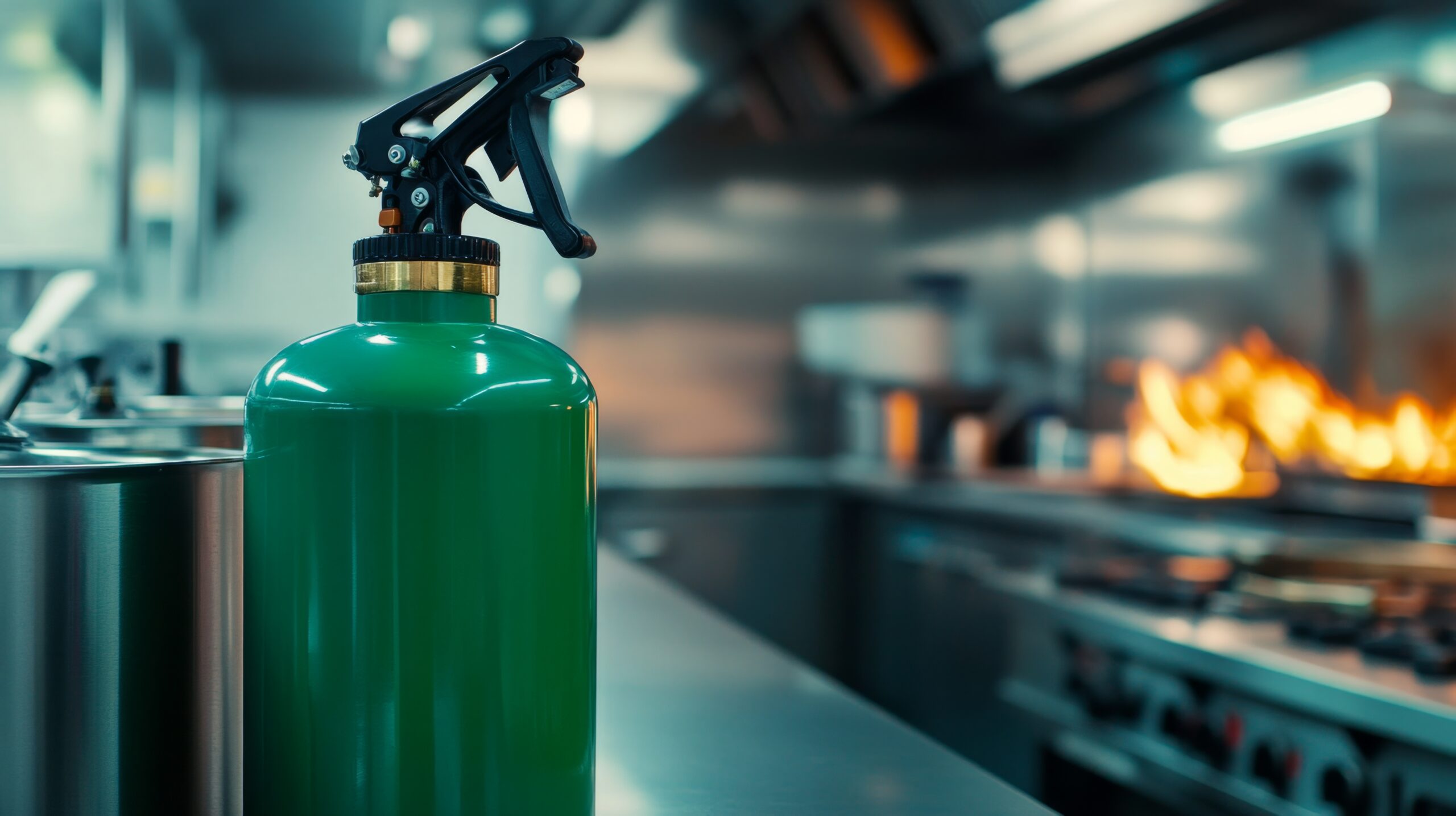
A Class K fire extinguisher is designed to extinguish fires involving cooking oils, grease, and animal fats found in commercial kitchens. Using a wet chemical agent, it cools burning oil while creating a protective barrier that helps prevent reignition. Restaurants, cafeterias, hospitals, schools, hotels, food trucks, and other commercial kitchens throughout New York State (excluding New York City and Long Island) and Pennsylvania rely on Class K extinguishers to help meet fire code requirements and protect employees and property.
Key Takeaways
- Class K fire extinguishers are specifically designed to extinguish cooking oil and grease fires in commercial kitchens using a wet chemical suppression agent.
- Unlike standard ABC extinguishers, Class K units cool burning oil and create a protective foam layer that helps prevent reignition.
- Restaurants, cafeterias, food trucks, hotels, hospitals, schools, and other commercial kitchens using grease-producing equipment are typically required to have Class K fire extinguishers.
- Monthly inspections, annual professional servicing, and scheduled maintenance help keep Class K fire extinguishers compliant and ready for emergencies.
How Class K Fire Extinguishers Stop Cooking Oil and Grease Fires Safely
Commercial kitchens present unique fire hazards because cooking oils can reach temperatures well above their ignition point. Class K fire extinguishers are engineered specifically for these conditions, using a suppression method that differs significantly from standard portable extinguishers.
Class K Fire Extinguishers Discharge a Wet Chemical Agent
Class K fire extinguishers are specifically designed for fires involving combustible cooking oils and animal fats used in commercial kitchens. Unlike standard portable extinguishers, they discharge a wet chemical agent that cools overheated cooking media while forming a protective layer over the oil. This specialized suppression method makes them the preferred choice for deep fryers, griddles, charbroilers, woks, and other grease-producing appliances.
Cools Down Burning Cooking Oil
Class K fire extinguishers contain a potassium acetate- or potassium citrate-based wet chemical solution stored under low pressure. When discharged, the agent is released as a fine mist that minimizes splashing and quickly cools the burning cooking oil.
As the wet chemical contacts the hot grease, it reacts with the fats through a process called saponification, forming a soap-like layer that blankets the surface of the oil. This layer blocks oxygen while cooling the oil below its ignition temperature, helping extinguish the flames and reducing the risk of reignition.
Creates a Protective Soap-Like Barrier
Although ABC fire extinguishers are common in commercial buildings, they are not intended for high-temperature cooking oil fires. Their dry chemical agent interrupts combustion but does not effectively cool overheated grease, allowing the oil to reignite. Class K extinguishers cool the oil while forming a protective foam barrier, making them the appropriate choice for commercial kitchens.
What Cooking Equipment Requires a Class K Fire Extinguisher
Commercial kitchens that use equipment capable of producing combustible grease or cooking oil typically require Class K fire extinguishers nearby. This includes deep fryers, flat-top griddles, charbroilers, pressure fryers, woks, tilt skillets, and other appliances that operate with vegetable oils or animal fats.
Prevents Grease Fires From Reigniting
Any commercial kitchen that prepares food with grease-producing cooking equipment is typically required to have a Class K fire extinguisher readily accessible. This commonly includes restaurants, cafeterias, hotels, hospitals, schools, universities, food trucks, catering kitchens, grocery stores with prepared food departments, and other commercial food service facilities.
While NFPA 10 establishes portable fire extinguisher requirements, local fire codes and the Authority Having Jurisdiction (AHJ) determine how they are enforced.
Protects Commercial Cooking Equipment
Class K fire extinguishers should be installed where employees can quickly reach them during a cooking fire without having to move through the flames. They are typically mounted near deep fryers, griddles, charbroilers, and other grease-producing appliances while remaining far enough away to allow safe access during an emergency.
The extinguisher should remain clearly visible, easy to access, and free from obstructions such as equipment or stored materials. Class K extinguishers complement automatic kitchen hood suppression systems by giving trained staff another way to control smaller fires or respond after the system activates.
Maintaining Class K Fire Extinguishers for Code Compliance
Installing the correct extinguisher is only one part of protecting a commercial kitchen. Routine inspections and scheduled maintenance help ensure Class K extinguishers remain ready for emergencies while satisfying fire code requirements.
Monthly Visual Inspections Kitchen Staff Should Perform
Kitchen staff should visually inspect each Class K extinguisher monthly to verify it remains accessible, properly charged, and free from damage or obstruction. These routine checks help identify issues before they become code violations or affect performance during an emergency.
Annual Professional Inspection Requirements
NFPA 10 requires annual inspections by a qualified fire protection company. During the inspection, technicians verify the extinguisher’s condition, operating pressure, and wet chemical agent while confirming it remains suitable for the kitchen hazards present before updating inspection records and service tags.
When a Class K Fire Extinguisher Needs Recharging or Replacement
Even if a Class K fire extinguisher has never been discharged, it may eventually require professional service. A pressure gauge outside the normal operating range, a damaged hose or cylinder, corrosion, a missing tamper seal, or any previous discharge are all signs the extinguisher should be inspected.
In many cases, the unit can be recharged and returned to service, but extinguishers with damaged cylinders or other critical components may need to be replaced to maintain safe and reliable operation.
Six-Year Maintenance and Hydrostatic Testing Requirements
In addition to annual inspections, Class K fire extinguishers require periodic maintenance throughout their service life. NFPA 10 specifies six-year internal maintenance for certain stored-pressure extinguishers and hydrostatic testing at designated intervals to verify the cylinder can safely contain its operating pressure.
Keeping up with these maintenance milestones helps businesses maintain compliance while ensuring their extinguishers remain safe and reliable.
Schedule Class K Fire Extinguisher Inspection and Service
Empire Fire Protection Services provides inspection, testing, maintenance, and repair for Class K fire extinguishers and commercial kitchen suppression systems throughout New York State (excluding New York City and Long Island) and Pennsylvania.
Contact us today to schedule service or request a quote.
Frequently Asked Questions
What is the difference between a class b and class k fire?
Class B fires involve flammable liquids such as gasoline, diesel fuel, solvents, and similar materials. Class K fire extinguishers are specifically designed for fires involving cooking oils, grease, and animal fats used in commercial kitchens. Because cooking oils and grease retain extreme heat, they require a wet chemical suppression agent designed to cool the fuel and help prevent reignition.
Why can’t you use an ABC extinguisher on a grease fire?
ABC extinguishers interrupt combustion using dry chemical powder but do not effectively cool overheated cooking oil. Without cooling the fuel, the grease can reignite after the flames appear to be extinguished. Class K extinguishers use a wet chemical agent that cools the oil while creating a protective barrier over its surface.
Which businesses are required to have class k fire extinguishers?
Commercial kitchens that use grease-producing cooking equipment typically require Class K fire extinguishers. This commonly includes restaurants, cafeterias, hotels, hospitals, schools, food trucks, grocery stores with prepared food departments, catering kitchens, and similar food service facilities.
How often do class k fire extinguishers need inspection?
Kitchen staff should perform monthly visual inspections, while qualified fire protection professionals should complete annual inspections. Additional six-year maintenance and hydrostatic testing must also be completed according to NFPA 10 requirements and manufacturer recommendations.