
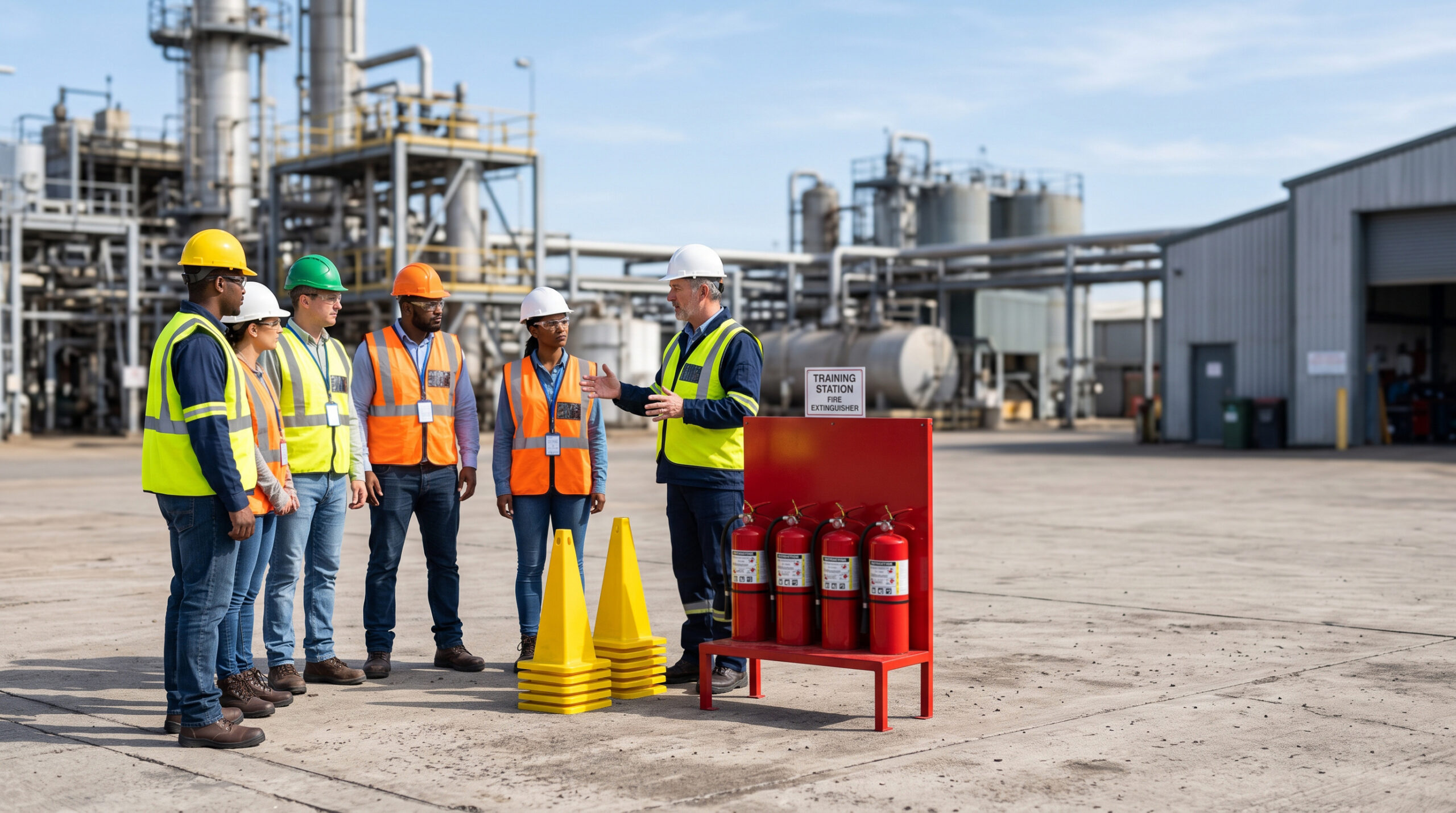
Fire safety training teaches employees to follow RACE to respond to a fire and PASS to operate a portable extinguisher. OSHA requires this training at hire and every year after for employees expected to use extinguishers. Businesses across Upstate New York and Pennsylvania face real fire risks, from kitchen grease to heating equipment in long winters. This guide explains both methods, the OSHA training rules, and the steps that keep a workplace compliant.
Key Takeaways
- RACE stands for Rescue, Alarm, Contain, and Extinguish or Evacuate, guiding employees through the initial steps of workplace fire response.
- PASS stands for Pull, Aim, Squeeze, and Sweep, teaching trained employees how to operate a fire extinguisher safely.
- OSHA standard 1910.157 requires initial and annual fire extinguisher education or training for covered employees, depending on their responsibilities and evacuation policies.
- Monthly visual inspections, annual extinguisher maintenance, and proper documentation help businesses maintain fire safety compliance.
- Online fire safety training combined with workplace walkthroughs helps employees understand emergency procedures, extinguisher locations, and evacuation routes.
How RACE and PASS Guide Safe Workplace Fire Response
RACE and PASS work together as one response plan. RACE tells employees what to do in the first minutes of a fire, and PASS tells them how to use an extinguisher if fighting the fire is safe. Both are easy to remember under stress, which is why they anchor employee fire safety training.
RACE: A Step‑by‑Step Emergency Framework
RACE provides employees with a clear sequence during a fire: Rescue those in danger, Activate the alarm, Confine the fire by closing doors, and Extinguish or Evacuate depending on the situation. This order ensures life safety comes first while slowing fire spread and alerting others.
PASS: The Correct Way to Use an Extinguisher
PASS teaches the practical technique for operating a fire extinguisher: Pull the pin, aim at the base, squeeze the handle, and sweep side to side. This simple method builds confidence and muscle memory so employees can act quickly under stress.
Why RACE and PASS Work Together
RACE tells employees what to do in the first moments of a fire, while PASS shows them how to use extinguishers effectively. Together, they create a complete safety response system that protects lives, reduces property damage, and keeps workplaces compliant with fire safety standards.
OSHA Training Requirements and Compliance Steps for Pennsylvania Employers
OSHA sets the rules for employee extinguisher training in most private workplaces. Pennsylvania employers follow the same federal standards, and Upstate New York private employers do as well. The steps below show what the standard requires and how businesses document it.
Fire Extinguisher Training Requirements Under OSHA
OSHA requires employers providing extinguishers to establish training programs covering basic operation and hazards of fighting workplace fires.
Employees designated to use firefighting equipment must also receive training appropriate to the equipment they are expected to operate.
Frequency of Employee Fire Safety Training
OSHA requires extinguisher education upon initial employment and at least annually thereafter for employees covered by its educational requirements. Employees designated to use firefighting equipment must train at assignment and annually, reinforcing safe procedures and effective emergency response decisions.
Training Rules for Businesses With Total Evacuation Policies
Businesses with qualifying total evacuation policies may be exempt from certain OSHA portable fire extinguisher training requirements when employees are instructed not to fight fires.
Employers must ensure their emergency action plans meet applicable OSHA requirements and clearly explain evacuation routes, alarm procedures, and employee responsibilities.
Recordkeeping and Inspection Duties for Compliance
OSHA requires monthly visual extinguisher inspections and annual maintenance, while NFPA 10 sets additional testing intervals depending on extinguisher type.
Employers should maintain required maintenance records and document employee training dates, attendance, and covered topics to support compliance reviews.
Online Training and Practical Walkthroughs
Online fire safety training can introduce employees to OSHA requirements, RACE and PASS procedures, and fire extinguisher classifications. Combining digital instruction with walkthroughs helps employees locate extinguishers, identify evacuation routes, understand hazards, while designated users receive training suited to assigned duties.
Schedule Fire Extinguisher Service for Your Business
Trained employees need extinguishers that are inspected, charged, and ready to use. Empire Fire Protection Services inspects, tests, and recharges portable extinguishers for commercial clients across New York State (excluding NYC/Long Island) and Pennsylvania.
Contact us to request a quote or schedule an inspection.
Frequently Asked Questions
What is the difference between RACE and PASS in fire safety training?
RACE guides employees through the initial response to a fire, including rescuing people when safe, activating alarms, containing the fire, and extinguishing or evacuating. PASS explains the four steps for operating a portable fire extinguisher: Pull, Aim, Squeeze, and Sweep.
How often must employees receive fire safety training?
OSHA 1910.157 requires training at hire and annually when employers provide extinguishers for employee use. Employees designated to fight fires also need training when first assigned. Total evacuation policies change which employees need hands-on training.
How often should workplace fire extinguishers be inspected?
OSHA requires portable fire extinguishers to receive monthly visual inspections and annual maintenance checks. Additional maintenance and testing may be required under NFPA 10, depending on the extinguisher type, and employers must maintain required maintenance records.
Do businesses with total evacuation policies need fire extinguisher training?
Businesses with qualifying total evacuation policies may be exempt from OSHA extinguisher training when employees are not expected to fight fires. Employers must still maintain emergency action plans and train staff on evacuation routes, alarms, and responsibilities.
Can employees take fire safety training online?
Online fire safety training can cover RACE, PASS, and extinguisher classes effectively. Many employers add a short walkthrough so employees locate the actual extinguishers, exits, and alarm pull stations at their own site.