
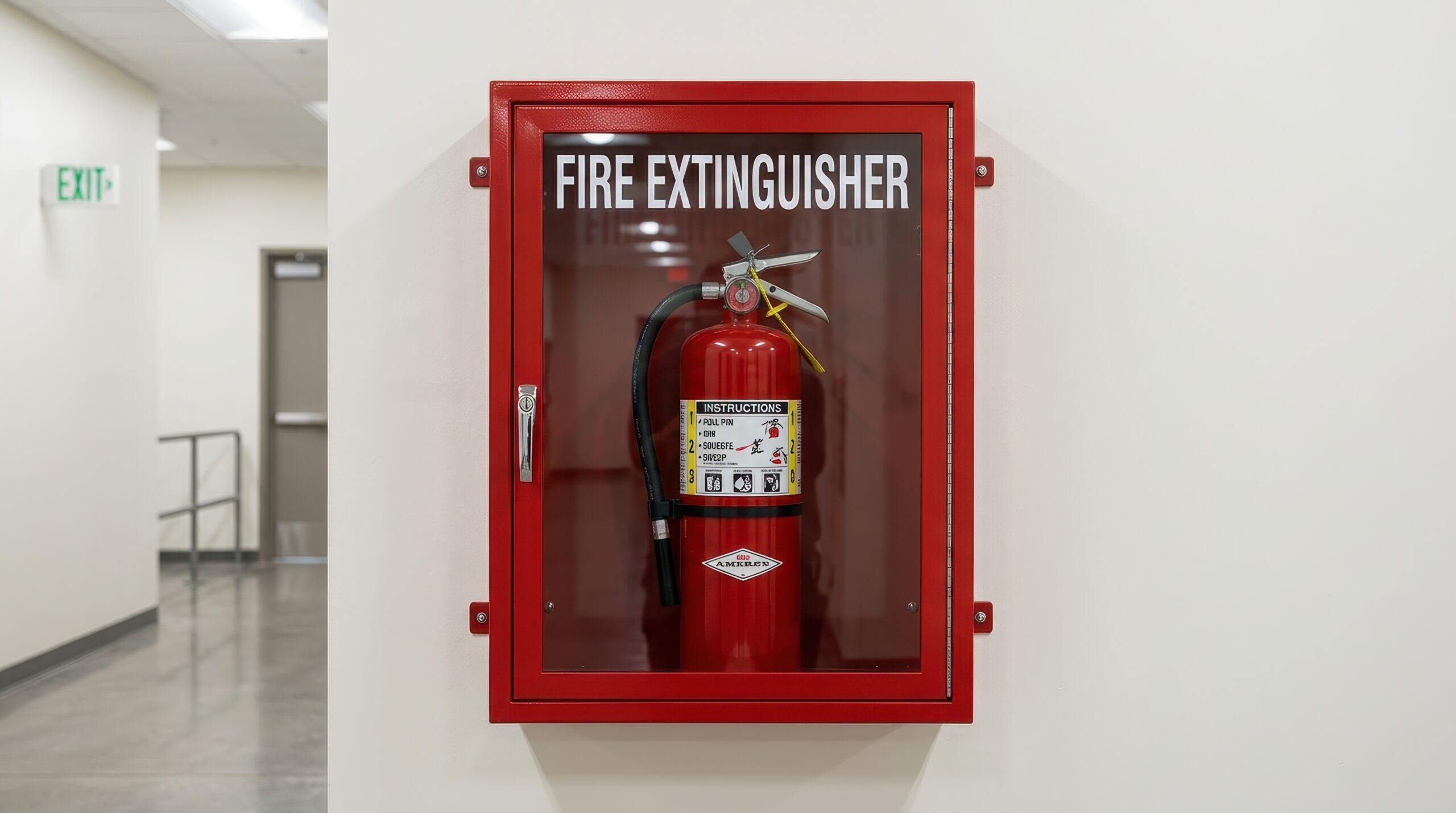
For commercial properties across New York and Pennsylvania, selecting the correct fire extinguisher classes for commercial buildings requires a risk-based approach. Offices, warehouses, kitchens, and production floors present different hazards that must be matched with the proper extinguisher type to meet code and protect occupants.
Key Takeaways
- Fire extinguisher classes include A, B, C, D, and K, each tied to a specific fuel type.
- Most commercial properties require multiple extinguisher types for mixed-use risks.
- Class K extinguishers are essential in kitchens where grease fires cannot be controlled with water.
- NFPA 10 and local AHJ rules define placement, inspection, and maintenance requirements.
Match Fire Extinguisher Classes to Your Business Fire Risks
Selecting the correct fire extinguisher starts with identifying the hazards present in your facility. Each extinguisher class is designed for a specific type of fire, making proper selection essential for effective fire protection and code compliance.
Class A Extinguishers for Ordinary Combustibles
Class A fire extinguishers cover materials like paper, wood, and textiles common in offices, schools, and retail spaces across New York and Pennsylvania. NFPA 10 limits travel distance to 75 feet in light-hazard occupancies, making these units a baseline requirement. Many facilities manage them through programs such as extinguisher and emergency lighting services to maintain consistent coverage.
Class B Extinguishers for Flammable Liquids
Class B fire extinguishers address flammable liquids such as gasoline, oils, and solvents found in maintenance and industrial areas. Water can spread these fires, so dry-chemical or foam agents are required. This aligns with NFPA guidance on vapor-based ignition risks.
Class C Extinguishers for Electrical Fires
Class C fire extinguishers are used around energized electrical equipment, including panels and server rooms. The non-conductive agent reduces shock risk. Units are typically positioned within 50 feet of equipment areas. Coordination with fire alarm monitoring supports faster response.
Class D Extinguishers for Combustible Metals
Class D fire extinguishers are required in facilities that process combustible metals like magnesium or titanium. Standard agents can react violently, so a dedicated dry-powder agent is necessary. Placement is limited to high-risk production zones based on hazard assessments.
Class K Extinguishers for Commercial Kitchens
Class K fire extinguishers are required in commercial kitchens using cooking oils and fats. These units are typically installed within 30 feet of cooking equipment and must meet UL 300 standards. Many kitchens pair portable units with pre-engineered kitchen suppression systems aligned with UL standards.
ABC Extinguishers for Combined Coverage
ABC fire extinguishers combine coverage for Class A, B, and C fires. They are commonly used in hallways, offices, and mixed-use spaces. Facilities often use ABC units as primary coverage and supplement them with Class K or D extinguishers where needed.
Matching Extinguisher Class to Room Function
Choosing the right extinguisher requires evaluating each room by use. A break room with cooking equipment may require a Class K unit, while adjacent office space relies on ABC coverage. This ensures each hazard is addressed directly.
Key Compliance Factors for Regional Commercial Properties
Code compliance depends on consistent inspection, proper extinguisher placement, and accurate documentation. These factors are routinely reviewed during fire marshal inspections and help ensure extinguishers remain accessible, serviceable, and ready for use during an emergency.
NFPA 10 Placement and Spacing Requirements
NFPA 10 establishes placement rules, including travel distances and mounting requirements. Extinguishers must be accessible within defined ranges based on hazard classification. Local officials across New York and Pennsylvania enforce these standards. Larger facilities may coordinate with systems such as fire alarm systems in Philadelphia.
Annual Inspection and Tagging Requirements
Commercial fire extinguishers must be inspected annually and tagged with the service date. Inspectors check tags first during walkthroughs. Missing or outdated tags are common compliance issues. Many facilities align this with fire alarm inspection in Rochester to streamline schedules.
Hydrostatic Testing and Six-Year Maintenance
Extinguishers require internal maintenance at six-year intervals and hydrostatic testing at set periods. These checks verify cylinder integrity and internal components. Expired dates can lead to failed inspections.
Kitchen Class K Requirements Under UL 300
Commercial kitchens must meet UL 300 standards for grease-producing equipment. This includes proper Class K placement and integration with compliant hood systems. Inspectors review both during fire and health inspections.
Matching Extinguisher Type to Local AHJ Expectations
The Authority Having Jurisdiction (AHJ) determines how fire code is applied locally. Requirements vary between municipalities across New York and Pennsylvania, especially for mixed-use buildings. Direct confirmation is often necessary.
Documentation for Insurance and Liability Purposes
Insurance providers often request inspection and maintenance records during audits or after a claim. Organized documentation supports compliance and shows systems were properly maintained.
Get Your Extinguisher Classes Reviewed Before Summer Inspections
Matching the correct fire extinguisher classes for commercial buildings requires a detailed review of hazards and compliance requirements. Empire Fire Protection Services supports businesses across New York and Pennsylvania with inspections and service.
Schedule a compliance review or request service through our contact us page to address gaps in extinguisher coverage, placement, and inspection status.
Frequently Asked Questions
What are the 4 types of fire extinguishers?
The most common types include Class A, B, C, and ABC combination extinguishers. Class A covers ordinary combustibles, Class B handles flammable liquids, and Class C is used for electrical fires.
What are Class ABC and D extinguishers?
ABC extinguishers provide combined coverage for combustibles, flammable liquids, and electrical fires. Class D extinguishers are designed for combustible metal fires and are typically used in industrial environments.
What are the 5 classes of fire?
Fire extinguishers are categorized into five classes: A, B, C, D, and K. Each class is designed for a specific fire hazard. Understanding these differences helps businesses choose the right extinguisher for each area of a commercial facility.
What are the 5 types of fire extinguishers and their colors?
Fire extinguisher classes use shapes and colors for identification. Class A uses a green triangle, Class B a red square, Class C a blue circle, Class D a yellow decagon, and Class K a black hexagon.